Thursday, 23 October 2014

A Star goes out

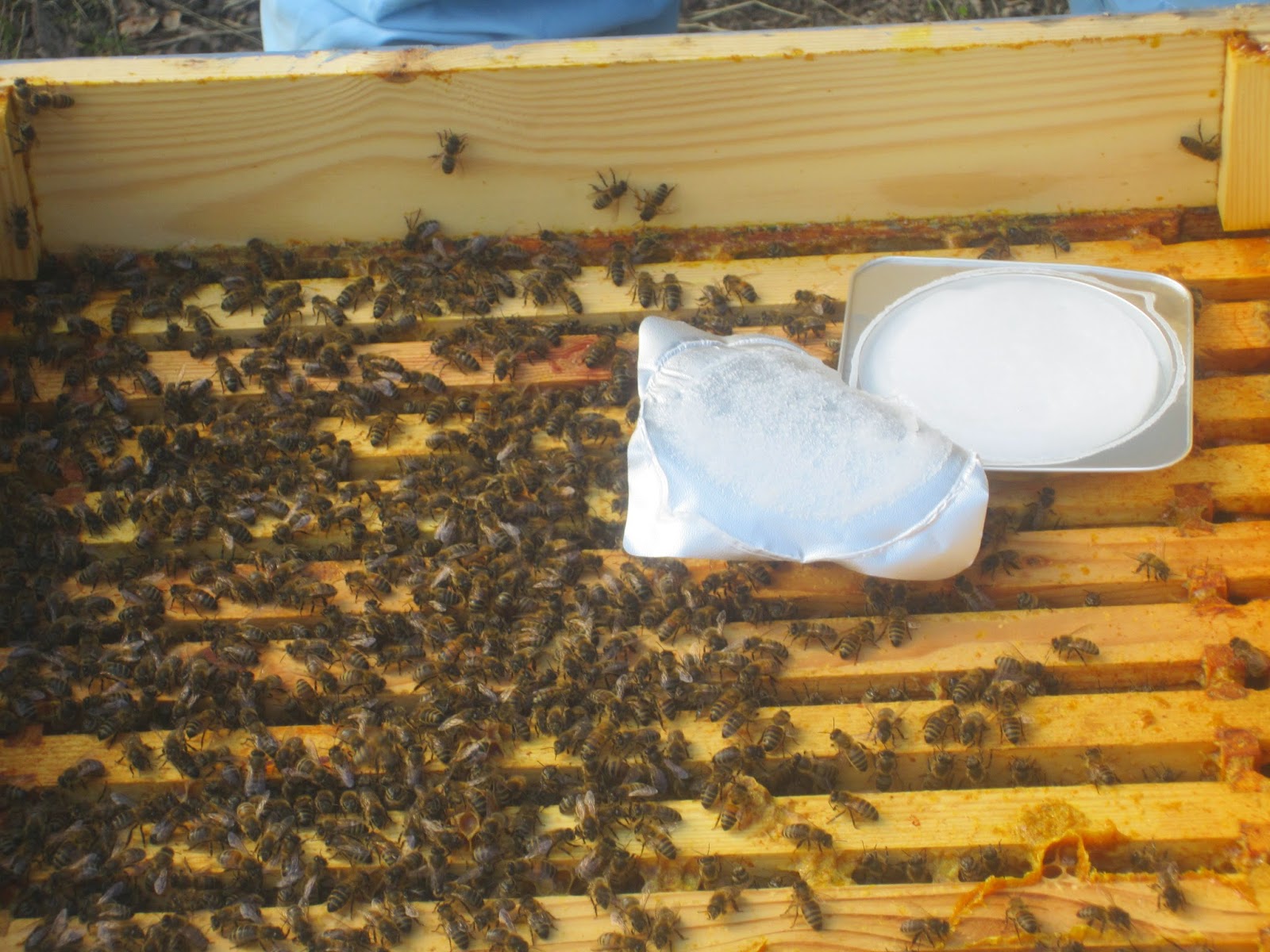
The Moon feeder in situ
I had wanted to remove the remains of the Star earlier, but somehow never managed to find the time. A call from the school office telling me the groundsmen were having trouble with the bees flying around the hollowed out Star forced me into action. With the ubiquitous Mr. V and a large rubbish bag we went to sort out the Star.

First of all we checked up on the Moon and refilled the feeder. Once again the bees had not taken much. Obviously there is still sufficient forage for them. Nevertheless, we filled the feeder brimful again.

After a few days of rain, the Star, open-roofed as it was, presented a more unsavoury sight: some of the wood had started to mould and the larvae (some of whose cases I had opened last inspection) were putrid. The smell was rank and would have been the match of the most seasoned garbage collector. For the first time the similarity of the beesuits to hazmat suits made sense.
Hazardous waste
Contrary to the alarmed accusations of the groundstaff, not a bee was close to the Star (sensible little creatures) and I don't blame them! Instead, cohorts of wasps hovered over the frames, unruffled by the smell. Holding our breath as much as possible, I cut around the frames to separate the rotting, mouldy wax combs from the wooden frames, which can be re-used after some cleaning. Giving free rein to my hatred of wasps, my hive tool also cut a few of them in half. Miraculously not a single wasp stung us. The gruesomely smelling wax we binned. Even Mr. V, who is no doubt used to the sharper edges of French cheese going slightly biological, found the odour épouvantable.

When all was cut and binned and tied up we stored the brood box with the empty frames in the beekeeping shed. Over the winter I will work on them and make them shiny and new and clean for re-use in the spring. Much like in The Return of the Jedi, the Star will be reborn.

The Star waiting for better days

Friday, 10 October 2014

Girls on Film

The school has decided to go all out on social media and the stars of the first facebook film are to be the bees. Selecting two pupils who have been beekeeping before, Mr. V and I went to the hives to fill up stores, if necessary, check up on the Star debris and show off the bees a bit for the cameraman (another teacher). The whole inspection was filmed, though in about 14 separate shorter clips, as the bees kept on showing too much interest in the camera, forcing the cameraman to stop filming fairly frequently. I hope their new status as stars doesn't turn my lovely little bees into temperamental divas!
The bees had not taken a lot of the stores, but we replenished what was gone. A quick look at some frames showed that all is fine with the Moon. Not all frames are full with stores yet, but then I didn't expect that.
The Star frames still have some honey on them and we spotted quite a few bees buzzing around them. Although a number of wasps made their presence felt (and also felt the edge of my hive tool), I decided to keep the Star box and frames out for a little longer.
No photos, as I expect a film on facebook!

Friday, 3 October 2014

Refill

Once again I only had time for a very short inspection. That was ok this time as I only wanted to fill up the feeder, having spent last night stirring syrup. The bees have not drunk much of the syrup. I think they are mainly emptying the Star brood frames of honey and pollen; when I checked these it was obvious that bees had been been removing the stores from here.
No photos as on my own and stressed (house singing competition again!).

Sunday, 28 September 2014

One is one and all alone...

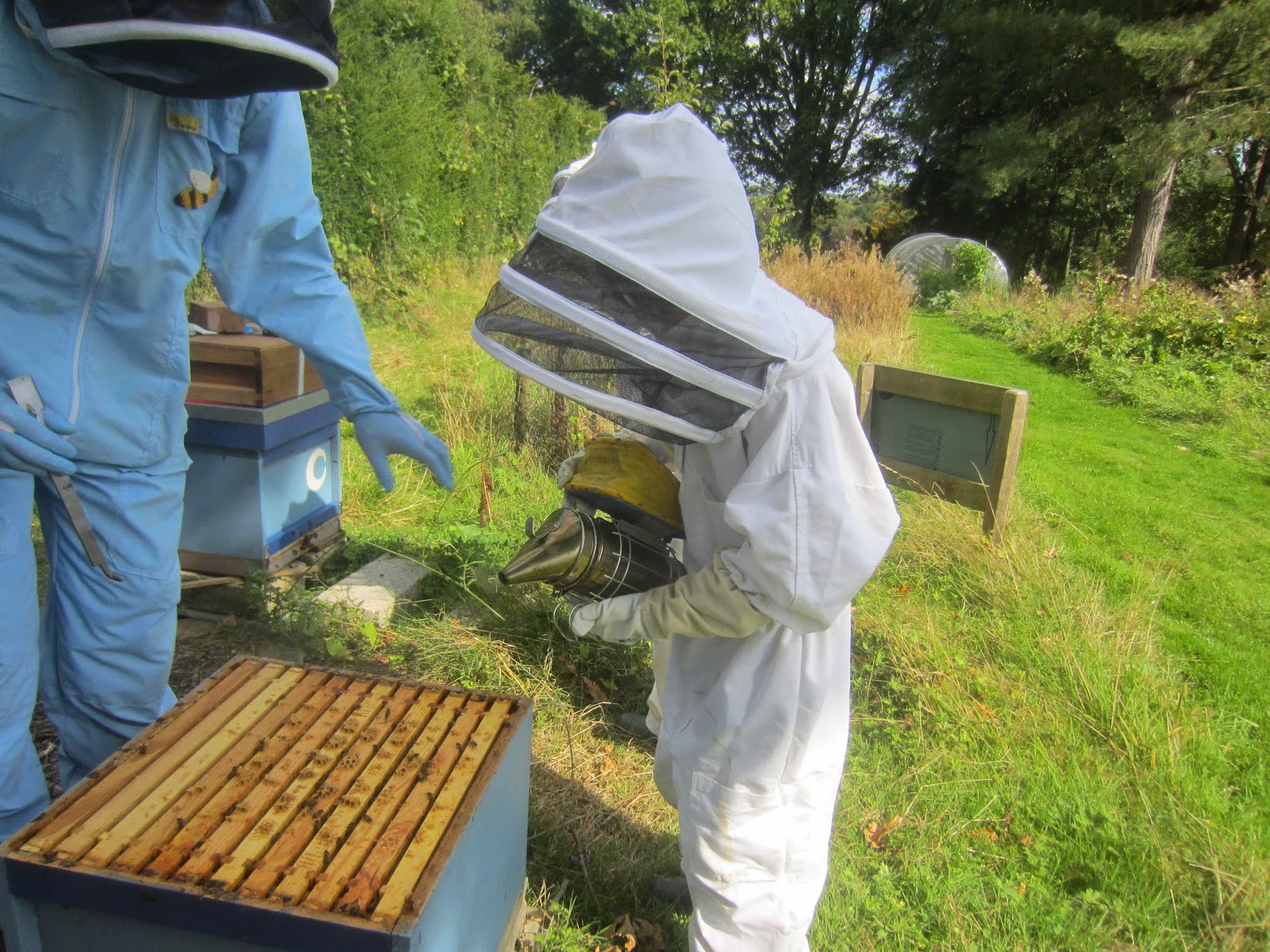
The master smoker at work
After yesterday's disappointment, we returned in force today to join Star and Moon in colonial endeavours. I had Goulwenn helping me, who has turned out to be a master of the campfire, also known as the smoker. His very thorough and methodical approach certainly guarantees better smoker results.

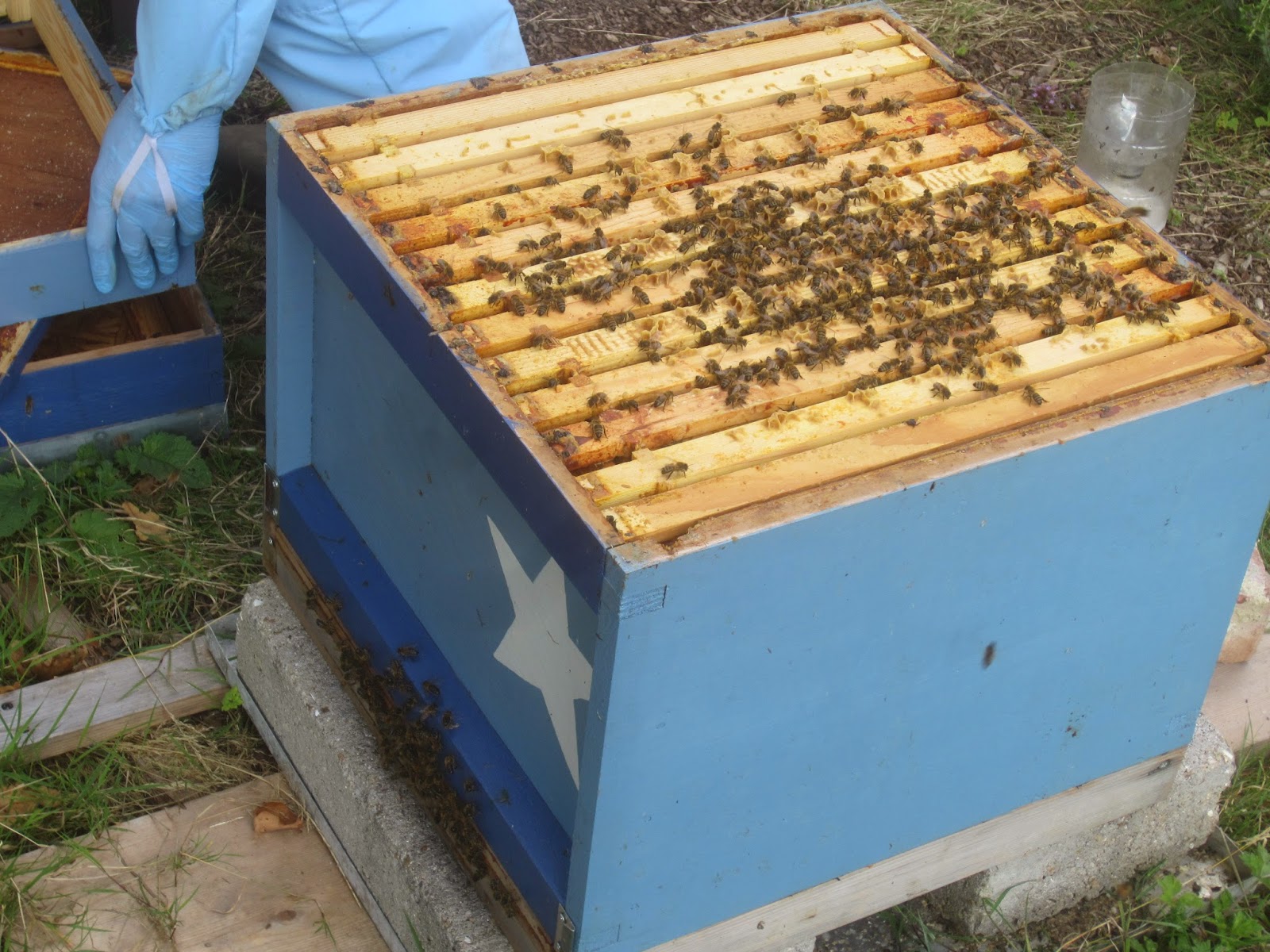
The bees had broken through the paper, but not in a very widespread way. Perhaps they want to be getting on with other things, rather than interior decorating, now that the season is basically over. Anyway, I felt they had broken through sufficiently to warrant joining them till the next swarm do them part. Taking the Star brood box, I put it to one side and shook each frame over the Moon, seeking to dislodge as many bees from the frame into the brood box. This did not work quite as well as hoped, so we had to resort to persuading the little ladies with the feather.

Persuading the stragglers to jump to the Moon


Checking through each frame, we were astonished to see so few bees. Conspicuous on three frame sides were small clusters of drone cells.

Drone comb - not a good sign at this time of year!

Lonely star
After we had sifted through all frames, we moved the Star away. By doing this, we hoped the remaining bees would fly back to the Moon. Also, perhaps, the bees would clear the stores from the Star, making winter preparations in the Moon easier. Goulwenn and I also checked the Moon, where all was fine, but very very sticky. In the past few weeks where they have hardly been inspected the bees have obviously decided to go propolis mad. It was like working your way through caramel.

Finally, having closed down the Star for this year, I filled the contact feeder with syrup (but didn't have enough to fill it to the brim) and turned it upside down, so the syrup would flow out until a vacuum builds inside the feeder, stopping the flow. Goulwenn kindly smoked the bees, so that when I put the contact feeder onto the frames of the hive, no bees were squashed. Yay!


Filling the feeder
Vacuuming the feeder

The Moon settling down again


Saturday, 27 September 2014

Not a breakthrough

Had a quick check up on the hives today, thinking the bees would have chewed their way through the news by now. And although they had removed a thin sliver of words, most of the paper was still there. So I closed up the double-hive and decided to return tomorrow.
Not sure what to make of their reluctance to break through. Hope it's not a bad sign. But I did notice that the Star had drone brood. So either the workers have started laying, which means there is no queen, or the queen has started laying - and it's only drone. As the area of lay was very small, I'm guessing it's the former.

Friday, 26 September 2014

School time

This term (year?) is turning out to be so hectic and filled to the last minute with activities that I will have trouble getting my bee inspections done, let alone take pupils along. This is very sad as one of the main points of having the hives in the school is to involve the pupils. So far this has always worked well, but today's inspection had to be sandwiched between lunch and rehearsals for the house singing competition. This meant I was on my own and also had to rush, which simply is not a good idea when handling bees.
The Tower of Beebel

So, working in a school environment does not only have advantages...

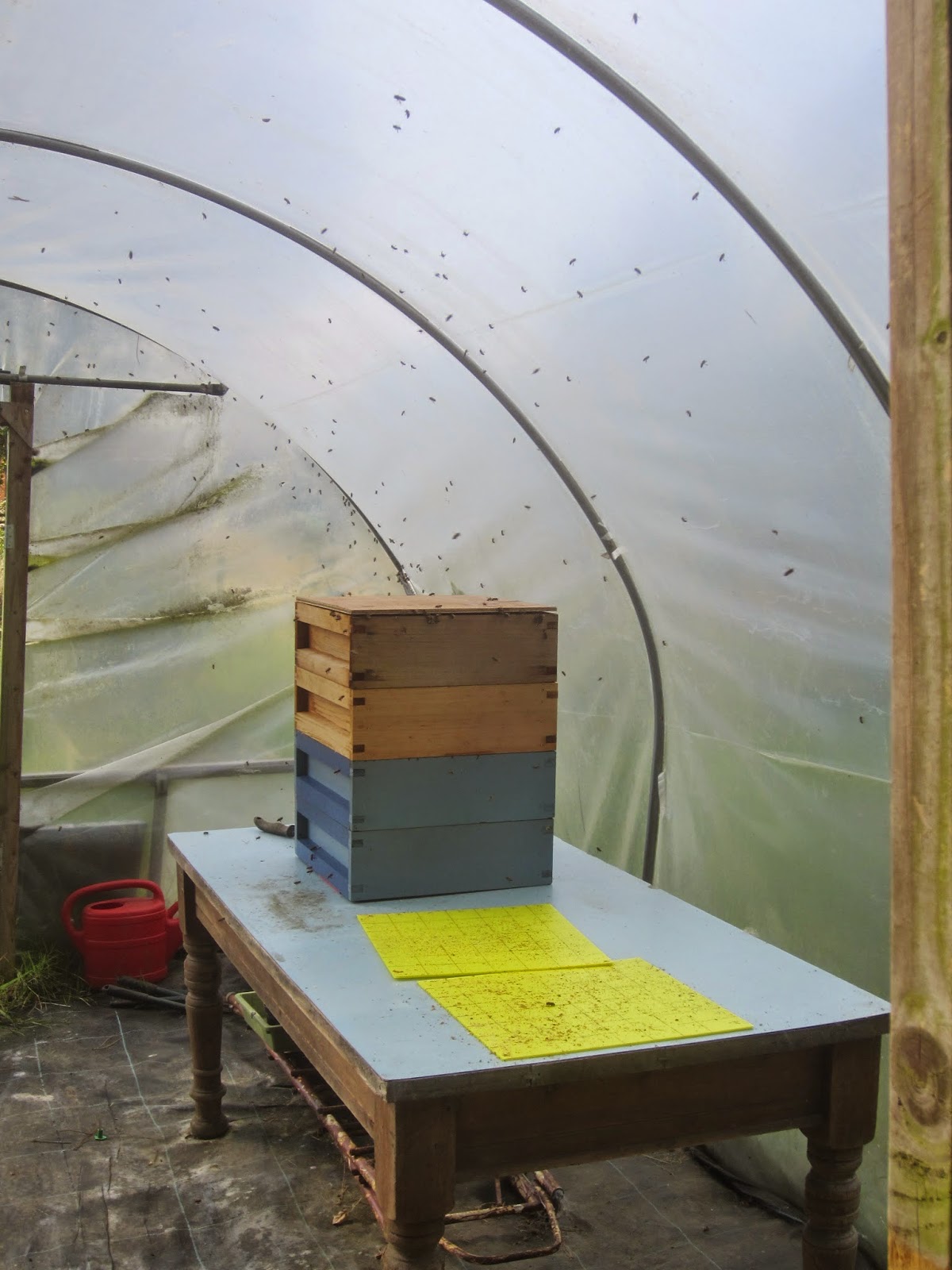
Before carrying out the inspection I stowed away the empty supers that had previously formed the 'hotel' (see the last post) int he shed. As hoped, all boxes were clear of bees and honey. Like last year wasps had started dismantling the wax, but this was on a much smaller scale.

Purpose of the visit to day was to take off the Apiguard varroa treatment and to amalgamate the hives. The former was no problem and easy enough, but the latter proved more difficult. The way you combine two hives (as avid readers of this blog will know) is to put one brood box over the other and to separate them with newspaper. This allows the pheromones to transfer between the two colonies, so by the time the bees have chewed their way through the paper, the two colonies accept one another.
The Star is over the Moon


As I only had very limited time, I did not use a smoker (I have since discovered that the secret to a good smoke, like in real life, is time!). This was not a brilliant idea, as I wanted to quickly check on the Star to see whether a miracle had occurred and there was brood. I also thought I might try to locate the queen (if there was one) and give her a crushingly quick ride into the afterlife (can't have two queens when you combine). However, the Star bees were very aggressive and came out in force, so all I could do was to lift them onto the open Moon. Being on my own, this was not an easy operation, especially as the floor of the Star stuck to the brood chamber (it needs to be off to combine two hives) and a wind was blowing, removing the newspaper between Moon and Star. Eventually, I did manage, but felt slightly apprehensive as I had rushed the job and potentially had two queens in the amalgamated hive. Not good; not good at all.
And I had stings in my hands, arms, knees and thighs to boot: almost competing with Goulwenn on the number of stings a person can get in one inspection.

Monday, 22 September 2014

Money for honey

Having somewhat more honey this year I decided two things:

(i) part of the money for the honey should go to a charity.
(ii) I would sell the honey at a stall at the school autumn fair at a regular price.

A friend, who had helped with the whole set-up of the beekeeping at school, drew my attention to the Elephants and Bees Project (http://elephantsandbees.com/), and as this was bee-themed, I decided this should be the beneficiary of the sale.


I did my research and found out that 8 oz. of local honey are sold for £4.40 at the local supermarket. I therefore thought £5 a fair price for the school-specific honey. Add another £1 for charity and I had my price of £6 per jar. While some parents made mumbling comments about the price, I think no-one will complain once they've tasted the honey. Indeed, the price can't have been too high, as all 132 jars were sold out within two days (89 at the fair, the others today outside the school at pick-up).

I am still in awe of the bees that managed to produce so much honey this year. Well done to them, that - despite my meddling and mess-ups - they managed to make so much delicious honey. Bees are truly special!

Friday, 12 September 2014

Fading Star

The first inspection of the new term with pupils accompanying shed a dim light on the Star. Its purpose was twofold: to renew the Apiguard varroa treatment and to check what was happening with the Star. As the title of the post suggests, the latter did not yield good news.

The inspection started off humorously with one pupil dancing around while piping and screaming because he had a spider inside his beesuit. I was scared this was going to turn into a full-blown crisis, but the pupil laughed about himself and could eventually be persuaded to put the beesuit on again.
A new Apiguard tray for the bees to stick down


First stop was the Moon. First job was to change the Apiguard treatment. The Moon bees had stuck the old tray to the frames and I had difficulty unsticking it, they had put so much propolis there. The pupils were fascinated by the toffee-like propolis and how it stuck. I'm surprised I didn't find at least one empty tray stuck to a pupil.
Sticky toffee Apiguard trays

 Checking through the supers, I saw most had been cleared and the bees were only using the bottom one to store honey again. So I removed it from the hive and put the whole super, with a lid on it, on the roof of the hive. I wedged a pencil underneath the super, so the bees can get in and out. Hopefully they will get the message and take out the rest of the honey and nectar from this super.

The things you can do with a pencil

A weak Star
Moving on to the Star, this presented a more dreary scene. While I was surprised at the number of bees still there (as well as some drones!), there really weren't many there any more. So, after the varroa treatment has finished, in a fortnight's time, I will amalgamate the two hives and have only one hive in the winter.

The small number of bees in the Star meant the pupils, who had been somewhat shy of the bees, obviously deciding all arthropods were superfluous that day, became more interested and dared to peer into the hive and get up close to the bees. They even tried out smoking the bees (it sounds so wrong, I know!). However, when I presented them with a drone and asked them whether they'd like to have it on their hand, they refused.

Children learning to smoke

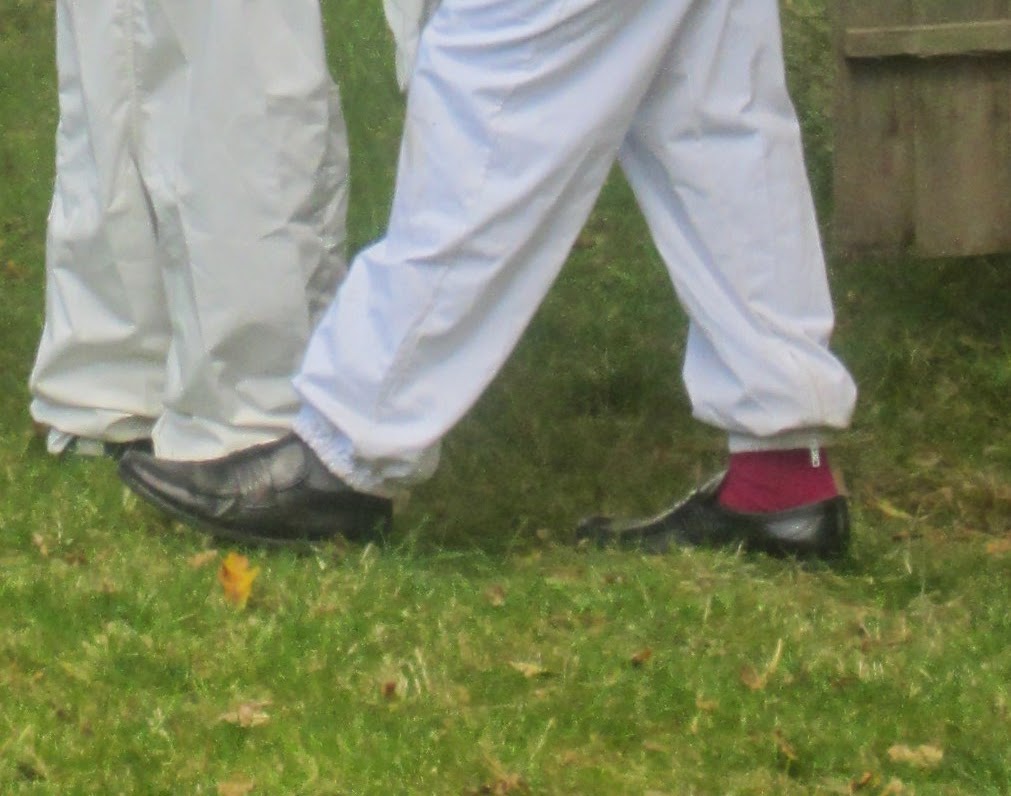
With school events pressing, the pupils went away with the accompanying teacher and companion of many bee inspections, Richie. So seasoned is he that he came to the inspection very casually wearing loafers.

I remained behind for a few moments to remove the empty supers and place them in a plastic tunnel, once again lidded at the top and pencilled at the bottom, in the hope the bees would evacuate them. The supers look a bit like a bee hotel, so I'm not sure they will actually leave. We'll see.

Hopefully not a bee hotel


Friday, 5 September 2014

Jarring news

After the stirring news of the honey harvest, this next piece of news is slightly jarring: with little time to spare during any day past or coming, I used an hour that was lying around today with nothing urgent to do and used it to jar the honey. Richard from the kitchens (once again, the benefits of a school environment!) was a great help, wiping the glasses free of honey. This was very necessary, as the bucket was dribbling and splurting honey from all places it shouldn't as well as the main tap.

The big surprise of the day was that I ran out of jars. With quite a bit of honey still left in the bucket, I was forced to close operations, as I had nowhere to put the honey. Today's tally was 122 jars, with more to come. Wow! When you think that this was all collected by the little, little bees, it does make you pause in awe. Well, it did and does me.

First thing I did after storing the jars in safe place and de-sticking my fingers was to order more jars, so I can get the rest of the harvest safely contained.

A field of honey jars
This year's honey is slightly lighter than last year's one, which may have to do with the mixing in of the spring nectar, and, to my taste buds, also not quite as sweet, though still as florally fragrant.

Thursday, 28 August 2014

Spinning honey

Today the big day was finally here: time to make honey. I remembered that last year it didn't take very long to spin out the honey, but then somewhere in the middle of the quite lengthy process this year I remembered I had only one super then and four this time round! Quite a difference. As in my previous dealings with the hives this summer, I had Mr. V to help me eat the honey.
First of all we had to remove the supers, which was not difficult, as the bees were mainly in the brood chamber and couldn't get out of the crown board, because Mr. V had installed the porter bee escapes (one way systems). There were still a few bees in the supers, which we would have to deal with later. We slid boards above and below the Moon supers and strapped them tight, so we could transport them without any more bees getting in.

Moon supers all tied up and ready to go
Star supers ready to disappear


Stupidly, not thinking very clearly (which has happened to me quite a bit of late), I removed the one way system from the Moon as soon as we had bound up the supers, so we had quite a few bees buzzing around. Must remember NOT to do that in future and I didn't for the Star. As I only had two boards (not very well prepared, I know), we used a towel, like last year, to shield the Star supers from bees.
All the supers went into the car and off we drove to the kitchens for the next steps. First of all, using the feather, we cleared the frames of the remaining bees outside.

Supers ready for extraction

Last year, you may remember, the tool of the day was the feather. Well, this year tool of the day (if you can call him a tool) was definitely Mr. V who was indefatigable and truly helpful and - if truth be told - thinking a lot more about what was going on than I was.
To get at the honey we first had to uncap the comb on both sides of the frames, place them, four at a time, into the extractor and then spin them. After a few spins, you turn the frames round and get the honey out of the other side.

Tool of the day!

Removing the wax cappings

Spinning honey
A frame in the extractor


A few noteworthy incidents this time: Some frames had pollen mixed in among the honey, which first of all set my into a slight fluster, until I realized if the pollen did spin out, the mesh at the bottom of the centrifuge would catch it and prevent it going into the honey.
I forgot to uncap both sides of a frame one time and Mr. V, although he noticed, didn't say anything as he thought this might be what you do. No. Just I being silly.
While taking off the supers, I only wore the jacket which had the irritable habit of sliding up when I was bending down, so not only did a bee sting me at the base of my spine, but a few bees also crept into my jacket. The first I noticed of them was a bee suddenly sitting on the inside of my veil as we were brushing bees off the frames. I immediately took off the jacket, and out flew another two bees that had been strolling around inside, too!
As expected some of the frames had rape honey in them which was too solid to extract. However, there was not much, suggesting the rape fields are far enough away for it not to be a major problem. Still, next year I will have to extract the rape harvest earlier.

After clearing away we had a tub full of honey - I would estimate almost three times as much as last year - and a huge plastic container full of wax cappings with some honey mixed in.

The wax cappings - crunchy!
The new honey flowing into the storage tub

Wednesday, 27 August 2014

Preparing for the harvest

Sketch showing the trajectory the crown board
needs to take
While I was away today (on urgent business - of course!), my very helpful and heroic teacher colleague jumped into the beesuit and prepared the hives for the taking off of the supers tomorrow. What he did was to put one-way systems into the crown boards. Then he took the crown boards away from the top of the hive, where their job should be to tell the bees that this is the end of their hive (the school bees never listen to that one!) and placed them both just above the brood box and queen excluders, meaning the bees can exit the supers into the brood box, but not then scurry back up again, meaning (unlike last year), the supers should be free of bees. Let's see if that works this time.

The crown board with the one way white plastic
system in place

Operation successful: the finished product

I have a very early start tomorrow, getting the extractor, and then in the afternoon, we'll see how much honey we get.